
FINE ART WEDDING PHOTOGRAPHY STUDIO SERVING ALL OF CANADA & DESTINATIONS BEYOND.
BASKIN CREATIVE CO.


WEDDING PLANNING
WEDDING FLOWERS: 7 DESIGN TIPS FROM A CANADIAN WEDDING PHOTOGRAPHER
Planning your wedding flowers? Discover seven expert floral design tips every couple should know from a Canadian wedding photographer to create an elegant wedding that photographs beautifully and feels unforgettable.
August, 05th, 2026
Planning your wedding? Watch the companion video below to discover the seven floral design principles every couple should know and learn how intentional wedding florals shape the atmosphere of your celebration and create timeless photographs. Then continue reading for a deeper guide that expands on every point discussed.
Introduction
There are few design elements that influence the atmosphere of a wedding as profoundly as flowers.
Long before the music begins, before your guests find their seats, and before you walk down the aisle, your floral design quietly begins telling the story of your celebration. It shapes first impressions, establishes emotion, softens architecture, and creates the backdrop against which some of the most meaningful moments of your life will unfold.
Yet despite their importance, the role of wedding flowers in weddings is often misunderstood.
When couples think about their wedding flowers, they naturally tend to think about it in terms of their chosen colour palette, or their favourite blooms, or in terms of how much of the wedding budget should be allocated towards flowers and floral design. And while those considerations certainly matter, they only scratch the surface of what exceptional floral design can accomplish.
As a Canadian wedding photographer, I have discovered over my many years as both a Canadian and destination wedding photographer that more often than not, the weddings that photograph most beautifully aren't necessarily the ones with the largest floral budgets, but instead are the weddings where every floral decision has been made carefully and intentionally. Rather than simply filling every available space with flowers, those couples took the time to understand how thoughtful placement, proportion, and cohesion can completely transform both the experience of the day and the photographs that preserve it.
That's because flowers don't simply decorate a wedding. They create atmosphere. They establish context. And they guide your guests' eyes.
But perhaps most important of all, they influence how every photograph feels long after the celebration has ended.
In the accompanying video above, I share seven principles that I believe every couple should understand before beginning to meet with florists but in this guide, we are going to go even deeper...
We'll explore why florals matter more than many couples realize, where your investment creates the greatest visual impact, how thoughtful floral design elevates your wedding photography, and the practical questions that will help you work confidently with your chosen floral designer.
So, whether you're envisioning an elegant ballroom celebration, an intimate garden ceremony, or a refined estate wedding, my hope is that this guide helps you see floral design through a different lens — not as an optional finishing touch, but as one of the most powerful storytelling tools you'll invest in throughout your wedding day.
Because when flowers are designed with intention, they don't just make your wedding look beautiful. They help your wedding feel unforgettable.

The most memorable wedding flowers don't simply decorate a space—they create the atmosphere where your memories are made.
Why Wedding Flowers Matter More Than Most Couples Realize
When most couples begin planning their wedding, flowers naturally find their way onto the checklist alongside the venue, photographer, caterer, and dress. They're recognized as an important part of the celebration, yet they're often thought of primarily as decoration — beautiful to look at, certainly, but ultimately secondary to the "big-ticket" decisions. And that is an understandable assumption because flowers are, after all, temporary. And by the time your wedding day comes to an end, the blooms that filled your ceremony and reception will have already begun the slow process of fading. Compared to something tangible like your wedding photographs or heirloom album — keepsakes you'll enjoy for decades — it can be tempting to see florals as one of the more fleeting investments you'll make.
But that perspective overlooks something incredibly important. And it's this: Flowers don't simply decorate a wedding. They shape the experience of it.
Long before your guests notice the details you've carefully chosen — the stationery, the place settings, the custom cocktails, or even the music — they begin forming an emotional impression of your celebration. That impression is created by the atmosphere that surrounds them the moment they arrive. And few design elements influence atmosphere as powerfully as florals. Whether your celebration feels romantic, dramatic, intimate, refined, modern, or timeless — all of that is communicated almost instantly through the scale, colour palette, texture, and placement of your floral design. Even guests who couldn't identify a single flower by name instinctively recognize when a space feels cohesive and thoughtfully designed. That's because your choice of flowers communicates emotion before your words ever do. They soften grand architecture, bring warmth to minimalist venues, create intimacy within expansive spaces, and naturally draw attention toward the moments that matter most. They help transform a venue into an environment that feels unmistakably personal — a celebration that couldn't belong to anyone else.
From my perspective as a Canadian and destination wedding photographer, this emotional transformation matters just as much as the visual one. Photography is about so much more than documenting what happened. It's about preserving what your wedding felt like. Over the years, I have come to realize that the most meaningful photographs aren't memorable simply because they're technically perfect. They're memorable because they transport you back into the atmosphere of the day. They remind you of the anticipation before the ceremony, the emotion of exchanging vows, the warmth of embracing family members, and the quiet moments shared together before the celebration began.
Your floral design quietly contributes to every one of those moments.
It creates softness behind your portraits. It frames your ceremony without distracting from it. It gives your reception dimension and depth. It adds movement, texture, and colour in ways that make photographs feel immersive rather than flat. In other words, your flowers become part of the visual language of your wedding story.
Perhaps the greatest misconception I encounter is the belief that flowers exist simply to fill empty space. In reality, thoughtfully designed florals do exactly the opposite.
They give your spaces purpose. Every arrangement becomes a visual cue that tells your guests — and your photographs — where to look, what to notice, and how to experience each part of the day. A ceremony installation naturally draws attention toward the vows. A beautifully designed bridal bouquet adds elegance and movement during portraits. Reception centrepieces invite guests into conversation while reinforcing the overall design story you've carefully created.
When every floral decision is made intentionally, your wedding begins to feel cohesive rather than merely decorated. And that distinction is significant.
Beautiful weddings aren't remembered because every available surface was covered in flowers. They're remembered because every design decision worked together to tell one consistent story. That's why I often encourage couples to think about florals differently. Instead of asking, "How many flowers do we need?" a better question to consider asking would be, "What feeling do we want our guests — and our future photographs — to remember and have?"
That subtle shift changes everything.
It moves the conversation away from quantity and toward intention. Away from simply purchasing flowers and toward creating an experience. And that is where a truly unforgettable wedding begins.
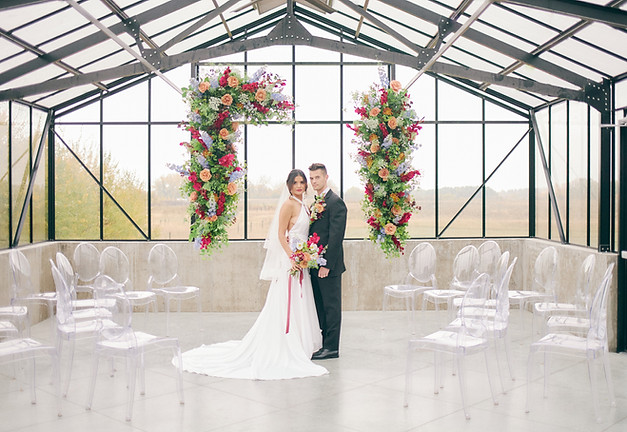
Rachel's Perspective: After photographing weddings for nearly a decade, I've noticed something surprising: the weddings that stay with me aren't necessarily the ones with the largest floral budgets. They're the ones where every floral choice feels purposeful.
Some of the most elegant celebrations that I have had the privilege of photographing have featured only a handful of thoughtfully designed floral moments — a ceremony installation that perfectly framed the couple, a bouquet that complemented rather than competed with the bride, and reception florals that enhanced the atmosphere without overwhelming it. Those weddings continue to feel timeless because the flowers were never trying to steal the spotlight; they were quietly supporting the story. That's the beauty of intentional floral design. It isn't about having more flowers. It's about giving each one a purpose.
Wedding Planning Takeaway
Flowers don't simply make a wedding look beautiful — they shape how your wedding feels. When your floral design is rooted in intention rather than quantity, every photograph becomes richer, every space becomes more inviting, and every memory becomes more immersive.
Where Your Floral Investment Creates the Greatest Impact
One of the most common misconceptions I encounter when speaking with engaged couples about their wedding plans is the belief that the impact of wedding florals is directly tied to how many flowers you have. And that is an understandable conclusion. After all, if flowers make a wedding beautiful, then it stands to reason that the more flowers one has at their wedding, then the more beautiful the wedding day will be. And while that may sounds great in theory, the truth is that this is rarely how exceptional wedding design work in practice.
In fact, some of the most refined weddings I've photographed have featured surprisingly restrained floral budgets. Not because the couples valued flowers less, but because they understood an important design principle that professional florists, planners, and photographers recognize almost instinctively: Impact comes from intentional placement — not sheer quantity.
This idea lies at the heart of thoughtful wedding design.
Rather than spreading your floral budget evenly across every table, hallway, corner, and decorative surface, consider concentrating your investment in the places where flowers will shape both the experience of the day and the story your photographs will tell. When you begin thinking this way, your floral budget starts working much harder for you.
Instead of dozens of arrangements quietly blending into the background, a handful of carefully considered floral moments become memorable visual anchors that define your entire celebration.
Think in Terms of Focal Points, Not Coverage
One of the easiest ways to maximize your floral investment is to stop asking, "Where can we put flowers?" and instead ask, "Where will people naturally look?" Every wedding has spaces that naturally draw attention. Your guests gather there. Important moments happen there. Your photographer returns to those locations throughout the day. Those are the places where thoughtful floral design creates the greatest return — not only visually, but emotionally as well.
For most weddings, these focal points include:
-
The ceremony backdrop
-
The aisle entrance
-
The head table or sweetheart table
-
Cocktail hour gathering spaces
-
The cake display
-
The dance floor (particularly if first dances happen nearby)
These aren't simply decorative locations. They're storytelling locations. They appear repeatedly throughout your wedding day, and because they appear repeatedly, they also become recurring elements throughout your wedding gallery. Every time your guests laugh during speeches, embrace one another after the ceremony, raise a toast, or watch your first dance, those carefully designed spaces quietly become part of the visual memory you're creating.
The Ceremony Is Almost Always Your Best Investment
If there is one place where I consistently encourage couples to prioritize their floral budget, it's the ceremony. Why? Because no other location carries quite the same significance. Your ceremony is where promises are exchanged. It's where emotions run highest. It's where every guest is fully present. And from a photography perspective, it's one of the most documented parts of your entire wedding day.
Every wide image. Every processional photograph. Every reaction from your guests. Every exchange of vows. Every first kiss. Every celebratory walk back down the aisle. All of these moments happen within the environment your ceremony florals help create. When that environment feels intentional, the photographs immediately feel more elevated — not because there are more flowers in the frame, but because there is greater visual harmony. Years from now, when you look back through your wedding album, you'll notice something interesting. The ceremony appears again and again. That makes it one of the most worthwhile places to invest in beautiful floral design.
Less Can Often Feel More Luxurious
Luxury isn't defined by excess. More often, it's defined by confidence. Confident design doesn't feel the need to fill every empty corner simply because it exists. Instead, it allows certain moments to breathe. This principle appears throughout architecture, interior design, fashion, and editorial styling, and wedding floral design is no different.
When every table is overflowing with arrangements, every aisle is densely lined with flowers, and every available surface is filled, the eye has nowhere to rest. Ironically, abundance can begin to feel visually repetitive but thoughtful restraint creates the opposite effect. By allowing certain spaces to remain intentionally simple, the moments where florals are present become even more impactful.
Your ceremony installation feels more dramatic. Your bouquet becomes more significant. Your reception design feels curated rather than crowded. The result isn't a wedding that feels sparse. It feels intentional.
And intentionality is one of the defining characteristics of timeless design.
Design for Repetition, Not Just First Impressions
Another way to think about your floral investment is to ask yourself one simple question: How many times will this arrangement appear throughout my wedding day?
Some floral moments are admired once and then largely forgotten. Others quietly become recurring characters in your wedding story. A thoughtfully designed ceremony installation might appear in dozens of photographs — from the processional and vows to family portraits, couple portraits, and even candid guest reactions. A beautifully styled bridal bouquet appears during getting ready photographs, first looks, portraits, ceremony images, detail photographs, and reception moments.
Meanwhile, a small decorative arrangement tucked into a hallway may be lovely, but if it appears in only one or two images, its contribution to your overall visual story is naturally much smaller. Thinking about floral design this way isn't about assigning value to one arrangement over another. It's about recognizing which design elements will continue giving back throughout the day. The most effective floral investments are the ones that serve multiple purposes, support multiple moments, and quietly strengthen the visual cohesion of your wedding from beginning to end.
Rachel's Perspective: One of the questions I often encourage couples to ask themselves isn't, "Where should we put flowers?" but rather, "Where do we want people to remember looking?"
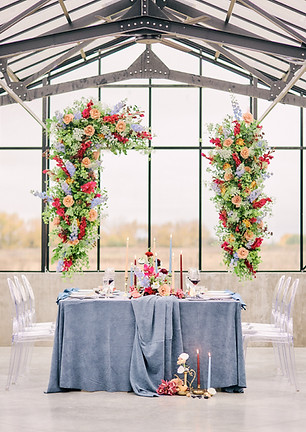
When I think back on the weddings that have stayed with me over the years, I rarely remember dozens of small arrangements scattered throughout the venue. What I remember are the spaces that immediately made me pause — a breathtaking ceremony installation, a beautifully framed sweetheart table, or a bouquet that perfectly complemented the bride without competing for attention.
Those are the details that continue to shape a wedding gallery long after the day is over.
If your floral budget has limitations — as is common with most weddings — my recommendation would be that you focused on creating three to four intentionally designed floral moments as opposed to spreading yourself too thin and creating thirty floral moments that fail to make the impression that you hoped for.

Wedding Planning Takeaway
The goal isn't to have flowers everywhere. The goal is to place them where they'll have the greatest emotional impact, appear repeatedly throughout your wedding day, and quietly strengthen the story your photographs will tell.
The most beautiful weddings aren't filled with flowers—they're defined by where those flowers are placed.
Designing Ceremony Florals That Photograph Beautifully
If your wedding gallery tells the story of your day, then your ceremony is its opening chapter. It is the place where anticipation gives way to emotion, where promises are exchanged, and where two families witness the beginning of a new legacy together. It is also, quite simply, one of the most photographed environments of your entire wedding day. From the moment your guests arrive until your joyful walk back down the aisle as newlyweds, your ceremony becomes the backdrop for dozens — if not hundreds — of photographs. Every wide establishing image, every close-up during your vows, every reaction from family members, every processional and recessional photograph is influenced by the environment you've created.
That's why thoughtful ceremony floral design has such a profound impact. The goal isn't simply to make your ceremony look beautiful in person. It's to create a setting that supports one of the most meaningful moments of your life while allowing those memories to be preserved beautifully for decades to come. After photographing weddings for nearly a decade, I've found that the ceremony florals that age the most gracefully almost always share three characteristics:
1. Scale That Feels Intentional
One of the biggest mistakes couples make isn't choosing the wrong flowers. It's overlooking proportion. Beautiful blooms can still feel underwhelming if they don't relate appropriately to the space around them.
Imagine standing beneath the soaring ceilings of a historic cathedral, inside the grand ballroom of a luxury hotel, or in front of a dramatic mountain landscape. In each of those settings, a single modest floral arrangement — even if exquisitely designed — can quickly feel visually insignificant against the scale of its surroundings. And likewise, the opposite can also be true. An oversized installation placed within a small, intimate venue may overwhelm the room and compete with the very people it's meant to celebrate.
Exceptional floral design isn't about making arrangements as large as possible. It's about creating balance. And professional floral designers think carefully about the relationship between flowers, architecture, and people. They consider ceiling height, aisle width, natural sightlines, surrounding textures, and how guests will experience the space from multiple perspectives.
When those elements are in harmony, the result feels effortless and your ceremony doesn't feel over-designed. It feels just right.
2. Frame the Couple — Don't Compete With Them
If I could offer couples one guiding principle for ceremony floral design, it would be this: Your flowers should enhance your story — not become the story. I often compare ceremony florals to supporting actors in a great film. The supporting cast plays an essential role. They enrich the narrative, create atmosphere, and help every important moment land with greater emotional weight. But they never distract from the main characters.
On your wedding day, you and your partner are the focus. Every design decision — from the architecture to the lighting, from the floral installation to the aisle décor — should naturally guide the eye toward the two of you. The strongest ceremony designs accomplish this beautifully. They create visual framing around the couple without enclosing them. They add texture without introducing distraction. They provide elegance without demanding attention. When your photographer steps back to capture the full ceremony, your floral installation should gently draw the viewer's eyes toward the exchange of vows, not pull their attention away from it. This is where restraint becomes one of the most powerful design tools available. Sometimes removing one element creates more impact than adding another.
3. Create Cohesion With Your Venue
Every venue has its own personality. A historic manor carries a different visual language than a modern art gallery. A European-inspired estate feels different from a vineyard. A downtown hotel ballroom tells a different story than an intimate garden ceremony. Thoughtful floral design doesn't ignore those differences. It embraces them.
Rather than forcing a trend into a space where it doesn't naturally belong, exceptional florists design arrangements that feel as though they were always meant to exist within that environment. The colours complement the architecture. The textures echo the surrounding materials. The overall scale feels appropriate. Nothing appears disconnected. This sense of cohesion is often difficult to define, but remarkably easy to feel.
Guests may never consciously notice why everything seems so harmonious. They simply experience a wedding that feels complete. And photographs respond to that harmony. Because when every design element speaks the same visual language, your wedding gallery feels cohesive from beginning to end. It tells one story rather than several competing ones.
What Matters Far Less Than Most Couples Expect
Just as there are principles that consistently elevate ceremony design, there are also details that many couples worry about far more than they need to, and understanding this distinction can often free both your creativity and your floral budget...
1. Intricate Details That Almost No One Will Notice
Beautiful craftsmanship absolutely has its place. But there is an important difference between thoughtful detail and unnecessary complexity. Many floral elements are admired only briefly before the ceremony begins, therefore the beauty of tiny design intricacies that can only be appreciated from a few inches away will disappear and lose their value once your guests are seated and the ceremony is underway.
Instead of investing heavily in microscopic perfection, prioritize the elements that shape the overall atmosphere. The emotional impression of your ceremony will almost always matter more than individual details that few people will ever see.
2. Perfect Symmetry for the Sake of Symmetry
As someone who naturally appreciates order and balance, I understand the appeal of perfectly symmetrical floral design. There is something undeniably elegant about clean lines and intentional structure. But symmetry should serve a purpose — not become the purpose. Nature itself rarely grows in perfect symmetry.
Some of the most captivating floral installations introduce gentle asymmetry that creates movement, softness, and a sense of organic beauty. The result often feels less manufactured and more alive. Rather than asking whether both sides match exactly, ask whether the overall design feels balanced. Those are two very different questions.
3. Floral Designs That Ignore the Space Around Them
Perhaps the most common design mistake isn't about flower choice at all. It's creating an arrangement that looks beautiful on its own but feels disconnected from the venue surrounding it. You've probably seen this happen before. A breathtaking installation photographed in one location is recreated somewhere completely different, where it suddenly feels out of place. That's because exceptional floral design isn't created in isolation. It's created in conversation with the environment.
The architecture. The lighting. The colour palette. The season. The scale. When every one of those elements works together, the flowers don't feel like an addition. They feel like they belong. And that sense of belonging is what creates timeless photographs.
Rachel's Perspective: One of the questions the greatest compliments that I could ever give a floral designer is this: "It looked like it had always been there."
When I walk into a ceremony space and the flowers feel completely at home within the architecture, the light, and the atmosphere, I know I'm about to photograph something special.
The installations I remember most aren't necessarily the largest or the most elaborate. They're the ones where every decision feels intentional. Nothing is competing for attention. Nothing feels forced. Everything works together to quietly support the significance of the moment.
That's what timeless wedding design looks like.
.jpg)
Wedding Planning Takeaway
The most beautiful ceremony florals don't compete with your love story — they frame it. When scale, cohesion, and intentional design come together, your ceremony becomes a setting that feels just as meaningful in your photographs decades from now as it did in the moment you said, "I do."
The goal of ceremony florals isn't to steal the spotlight—it's to create a setting worthy of the moment that deserves it.
Pinterest Is Inspiration—Not the Blueprint
There is no question that Pinterest has transformed the way couples plan weddings. Within minutes, you can create beautifully organized mood boards filled with breathtaking floral installations, elegant ceremony backdrops, lush reception tablescapes, and bouquets that seem almost too beautiful to be real. It's an incredible source of inspiration, and I encourage every couple to use it as part of their planning process. But there is one important thing to remember. Pinterest captures moments. Your wedding is an experience. Those are two very different things.
A single photograph on Pinterest represents just one carefully selected instant in time. It doesn't show what happened before that image was taken, how the florals looked six hours later, whether they survived the afternoon heat, how they were transported from ceremony to reception, or how they photographed from every other angle throughout the day. As photographers, planners, and florists, we have the privilege of seeing the entire story unfold. That's why we often evaluate floral design differently than someone scrolling through a collection of beautiful images online. We're not simply asking, "Does this look beautiful?" We're asking, "Will this still look beautiful at the end of the wedding day?"
Beautiful Florals Need to Work for More Than One Photograph
One of the hidden challenges of wedding floral design is longevity. Your flowers don't exist for a fifteen-second photo opportunity. They're asked to perform for an entire day. From the moment they're installed until the final dance, your floral arrangements need to remain fresh, structurally sound, and visually cohesive despite changing temperatures, shifting light, dozens of guests moving through the space, and the natural pace of a wedding day.
This is one of the reasons experienced floral designers are so valuable. They're not simply arranging flowers. They're solving problems most couples never even realize exist. They understand which blooms are better suited to warm summer ceremonies, which varieties are more delicate during transportation, how certain flowers respond to direct sunlight, and how to build installations that remain secure while still appearing effortlessly organic. Those decisions may never be obvious to your guests. But they make an enormous difference.
Real Weddings Are Constantly Changing
Unlike the carefully curated images we see online, weddings are dynamic. Guests arrive. Chairs move. The light changes throughout the day. Weather shifts unexpectedly. Bouquets are carried. Installations are relocated. Reception spaces gradually fill with people. Each of those transitions changes how your floral design is experienced. That means your flowers need to be flexible enough to support the story as it evolves.
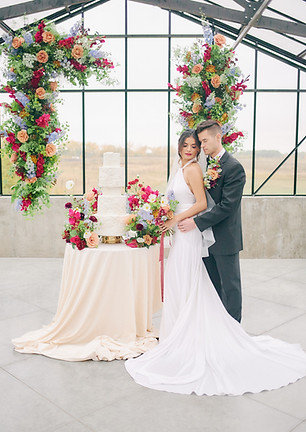
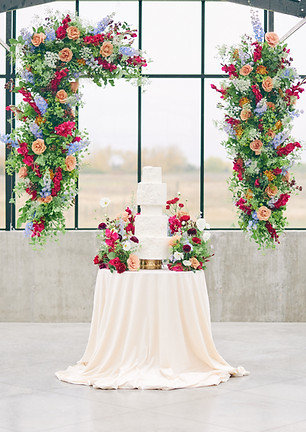
One of my favourite examples of this is floral repurposing. A ceremony installation that frames your vows might later become the backdrop for your sweetheart table. A pair of aisle arrangements may find new life framing your cake display. Bridesmaid bouquets can be thoughtfully placed around the reception after portraits are finished. When repurposing is planned from the very beginning — not improvised on the wedding day — it allows your floral investment to create beauty in multiple settings without feeling repetitive. This is one of the many reasons I encourage couples to talk about repurposing with their florist early in the planning process rather than treating it as an afterthought.
Movement Matters Just As Much As the Still Moments
One thing Pinterest rarely captures is movement. Your wedding day, however, is filled with it. Your father walking you down the aisle. The gentle movement of your bouquet as you laugh during portraits. The embrace after your first kiss. Your dress catching the breeze outdoors. Guests mingling during cocktail hour. Your first dance beneath softly lit florals. These are the moments that bring a wedding gallery to life.
Beautiful floral design doesn't simply photograph well when everyone is standing perfectly still. It continues supporting the story while people move naturally through the space. That's why experienced florists often think beyond aesthetics alone. They're considering sightlines. Guest flow. Accessibility. Structural stability. Photography angles. Even how arrangements will appear once chairs are occupied and the ceremony begins. It's a remarkably thoughtful process — one that often goes unnoticed precisely because it's been executed so well.
Build a Vision, Not a Copy
Perhaps the healthiest way to approach Pinterest is to view it as a source of ideas rather than a catalogue of designs to recreate. Instead of saving images because you want your wedding to look exactly like someone else's, pay attention to why certain photographs resonate with you. Is it the colour palette? The feeling? The scale? The softness? The architectural setting? The way the flowers frame the couple? The emotional atmosphere?
When you begin identifying the underlying characteristics instead of focusing on exact arrangements, you give your florist the freedom to create something uniquely yours. And that is where the most memorable weddings are born. After all, your wedding deserves to reflect your story — not someone else's algorithm.
Rachel's Perspective: Pinterest is one of my favourite planning tools, and I genuinely encourage my couples to use it. In fact, mood boards often become one of the easiest ways for couples to communicate preferences they struggle to put into words.
But I also encourage them to look beyond individual images.
Rather than sending twenty unrelated photographs because they all happen to be beautiful, I ask them to notice the common thread running through them. Is there a recurring colour palette? Do they consistently gravitate toward organic movement instead of formal symmetry? Are the spaces bright and airy, or intimate and moody? Are they drawn to architectural venues or garden settings?
Those patterns tell a much richer story than any single photograph ever could, and they give your florist, planner, and photographer the creative direction they need to design a wedding that feels authentically yours.
_2.jpg)

Wedding Planning Takeaway
Pinterest is an extraordinary place to discover inspiration, but your wedding shouldn't be a recreation of someone else's photograph. Use it to uncover the feeling you want your celebration to have, then trust your creative team to bring that feeling to life in a way that's uniquely your own.
Pinterest gives you beautiful moments. Thoughtful planning transforms those moments into a beautiful experience.
How Wedding Florals Shape the Way Your Photographs Feel
When couples think about wedding photography, it's natural to focus on the obvious things that influence beautiful images. The location. The lighting. The dress. The weather. The photographer. All of those elements certainly matter. But one of the quietest contributors to a timeless wedding gallery is something many couples don't fully appreciate until they see their finished photographs: Thoughtful floral design changes the emotional quality of an image. Not because flowers are the subject of every photograph, but because they're present in the environment where nearly every meaningful moment takes place.
As photographers, we often talk about creating images with depth, atmosphere, and emotion. While those qualities are influenced by technical decisions such as lighting and composition, they're also shaped by the world surrounding the people we're photographing. Flowers become part of that world. They influence photographs in ways that are often subtle enough to go unnoticed, yet powerful enough to completely transform the final result.
Florals Create Depth and Dimension
One of the simplest ways to understand this is to imagine two identical wedding portraits. In the first, the couple stands in front of a blank wall. In the second, they are standing in the very same location, but soft floral arrangements frame the foreground while a thoughtfully designed ceremony installation fills the background. The couple hasn't changed. The lighting hasn't changed. The photographer hasn't changed. Yet the photographs feel entirely different.
Why?
Because flowers introduce layers. Instead of the eye stopping immediately at the subjects, it naturally travels through the image, discovering textures, colour, and depth along the way. That layered quality creates photographs that feel immersive rather than two-dimensional. Rather than simply documenting what happened, they invite the viewer into the moment.
Flowers Soften a Space
Florals also have an extraordinary ability to soften environments. Even venues with strong architectural lines — grand ballrooms, historic churches, industrial lofts, or modern event spaces — can feel warmer and more inviting when flowers are thoughtfully incorporated into the design.
This softness becomes especially noticeable in photographs. Flowers help break up rigid lines. They introduce gentle curves. Organic movement. Texture. Natural variation. The result is an image that feels elegant without becoming overly formal. As photographers, we're constantly looking for ways to balance structure with softness, and florals often provide that balance beautifully.
They Naturally Draw the Eye to What Matters Most
Exceptional design quietly guides attention. Without realizing it, your guests instinctively know where to look because the design gently leads them there. Photography works in much the same way. A floral installation framing the ceremony naturally directs the viewer toward the exchange of vows. A bouquet introduces colour and movement while drawing attention back toward the bride. A thoughtfully designed reception backdrop helps anchor emotional moments like speeches and first dances without distracting from them.
In this way, flowers become visual guides. They help create photographs that feel intentional because every element within the frame supports the story rather than competing with it.
They Give Your Wedding Gallery a Consistent Visual Language
One of the characteristics that separates an average wedding gallery from an exceptional one is cohesion. The strongest galleries don't feel like hundreds of unrelated photographs.
They feel like one beautifully told story.
Thoughtful floral design plays a surprisingly important role in creating that continuity. The same colours appear throughout the day. The same textures reappear from getting ready through the reception. The same design language quietly connects the bouquet, ceremony, portraits, reception, and detail photographs. Even though the locations and moments change, the visual identity of the wedding remains consistent. That consistency allows your gallery to feel refined and timeless rather than visually fragmented. It's one of those details that most people don't consciously notice — but they absolutely feel it.
Flowers Help Preserve Emotion, Not Just Memories
Perhaps the most beautiful contribution flowers make isn't visual at all. It's emotional.
Years after your wedding day, you'll probably remember the laughter during speeches, the nervous excitement before the ceremony, the quiet squeeze of your partner's hand, and the overwhelming joy of walking back down the aisle together. Photographs become the bridge back to those memories. Flowers help strengthen that bridge.
Not because you'll remember every bloom that was chosen. But because those flowers helped shape the atmosphere in which those memories were created.
When your wedding gallery is filled with thoughtful colour, texture, movement, and intentional design, those images don't simply remind you of what happened. They remind you how it felt to be there. And in the end, that's what timeless wedding photography has always been about.
Rachel's Perspective: One of the greatest joys of delivering a wedding gallery is hearing my couple say to me something like, "Looking through those photographs feels like stepping back into the day!" Giving my couples that sort of feeling has always been my goal.
I don't want you to simply remember what your wedding looked like. I want you to remember the feeling of standing together during your vows. The anticipation before the ceremony began. The warmth of your family's embrace. The quiet moments that seemed to pass far too quickly.
Thoughtful floral design contributes to that experience in ways that often surprise couples. It softens spaces, creates atmosphere, and surrounds life's most meaningful moments with beauty — not for beauty's sake alone, but because those details become woven into the memories you'll carry for the rest of your lives.
That's why I believe flowers are never just décor. They're part of the emotional landscape of your wedding day.


Wedding Planning Takeaway
Your wedding flowers won't simply appear in your photographs — they'll quietly shape the atmosphere behind almost every meaningful moment. When florals are designed with intention, they add depth, cohesion, softness, and emotion, helping your wedding gallery feel less like a collection of images and more like the story of your day.
The most beautiful wedding photographs don't simply capture what your day looked like — they preserve what it felt like.
Questions to Ask Your Wedding Florist (and What Their Answers Reveal)
Choosing your wedding florist isn't simply about finding someone whose work you admire. It's about finding someone who understands how to translate your vision into an experience that will remain beautiful from the first guests' arrival until the final dance. That's an important distinction.
A beautiful website or Instagram portfolio certainly matters, but your wedding day will ask far more of your florist than creating one stunning arrangement for a styled photograph. They'll need to think through logistics, timing, weather, transportation, venue restrictions, installation, repurposing, longevity, and how every design element works together with the rest of your vendor team. That's why the consultation process matters so much.
The questions you ask won't just help you compare floral designers. They'll also give you valuable insight into how each florist approaches problem-solving, collaboration, and the wedding day as a whole.
Here are four questions I encourage every couple to ask.
1. "How Will These Designs Transition Throughout the Wedding Day?"
This is one of my favourite questions because it immediately reveals whether your florist is thinking beyond the installation itself. Exceptional floral designers don't simply create beautiful arrangements. They create a plan. If you've expressed interest in repurposing ceremony flowers for your reception, your florist should already be considering how those arrangements can be safely moved, who will relocate them, when that transition will happen, and whether they'll still look fresh several hours later. These details may seem small but in reality, they are what separate beautiful ideas from successful execution. A florist who confidently explains their transition process is often demonstrating something even more valuable than creativity...they are demonstrating experience.
2. "Which Floral Elements Can Be Repurposed Intentionally?"
One of the smartest ways to maximize your floral investment is by allowing certain arrangements to serve more than one purpose throughout the day. Your ceremony installation may become the backdrop for your sweetheart table. Large aisle arrangements can frame your cake display. Bridesmaid bouquets might become part of your reception décor. Welcome arrangements may find a second life near your guest book or lounge area. Repurposing isn't about making your budget appear larger than it is. It's about designing with intention from the very beginning. When this possibility is discussed during the planning process, your florist can recommend mechanics, construction methods, and flower selections that make those transitions both practical and beautiful. The result is a wedding that feels cohesive while allowing your floral investment to continue creating impact long after the ceremony has ended.
3. "How Do You Design for Beauty and Longevity?"
A floral arrangement only reaches its full potential if it still looks beautiful when it matters most. Depending on your wedding timeline, your flowers may need to remain fresh for eight, ten, or even twelve hours. That's why experienced florists think beyond aesthetics. They're considering hydration. Transportation. Seasonal temperatures. The durability of different flower varieties. Sun exposure. Wind. Venue conditions. Installation timing. Every one of those decisions contributes to how your flowers will perform throughout the day. A florist who naturally discusses these considerations is demonstrating that they're thinking about your wedding experience — not simply your wedding photographs. And that's exactly the kind of long-term perspective you want from someone entrusted with such an important part of your celebration.
4. "How Will My Floral Design Complement My Venue?"
This may be the most overlooked question of all. Beautiful flowers are only one part of exceptional floral design. Where they live matters just as much. An experienced florist will usually ask about your venue long before they begin recommending specific arrangements. Why? Because every venue tells a different visual story. Historic architecture. Modern minimalism. European elegance. Industrial character. Garden romance. Each environment invites a different design approach. Rather than trying to recreate something they saw on Pinterest, a thoughtful florist will consider how your flowers can enhance the unique qualities of your venue while still reflecting your personality and vision. That's where truly timeless floral design begins.
Listen for Collaboration, Not Just Creativity
As important as these questions are, I'd encourage you to pay just as much attention to how your florist answers them as what they say. Do they ask thoughtful questions about your priorities? Do they seem genuinely interested in understanding your vision? Do they explain their recommendations in a way that helps you feel informed rather than overwhelmed? Do they speak positively about collaborating with your planner, photographer, and venue? Those qualities often tell you more than a portfolio ever could.
The best wedding vendors rarely work in isolation. They work together. Your florist isn't simply creating flowers. They're collaborating with your planner to ensure installations happen on schedule. They're coordinating with your venue to understand access and setup times. They're considering how guests will move through the space. They're working alongside your photographer to create environments that will beautifully preserve the memories you're making. When every member of your creative team shares that collaborative mindset, your wedding day feels remarkably calm. And more often than not, that's exactly what allows beautiful moments to unfold naturally.
Rachel's Perspective: One of the things I appreciate most about experienced florists isn't simply their creativity. It's their curiosity.
The best floral designers I've worked alongside ask wonderful questions. They want to know how the ceremony will flow, whether arrangements will be moved afterward, what the lighting will be like, how the venue functions, and how the overall design vision connects with the rest of the day.
Those conversations tell me we're all working toward the same goal. Not just creating beautiful flowers. Creating a wedding experience where every decision supports the next one. As a photographer, that's incredibly reassuring because it means every vendor is contributing to one cohesive story rather than working independently.
Wedding Planning Takeaway
The best florist isn't simply the one with the most beautiful portfolio — it's the one who understands how beautiful design, thoughtful logistics, and genuine collaboration come together to create an unforgettable wedding experience.
The right florist doesn't just arrange flowers — they help orchestrate an experience where beauty, logistics, and storytelling work together seamlessly.
Why Restraint Is One of the Most Elegant Design Decisions You Can Make
When people hear the phrase luxury wedding, it's easy to imagine abundance. Towering floral installations. Lavish centrepieces. Hundreds upon hundreds of flowers. An overwhelming sense of grandeur. And while there is certainly a place for weddings that embrace abundance on a magnificent scale, I've discovered something surprising after photographing weddings for nearly a decade: The weddings that feel the most luxurious aren't always the ones with the biggest floral budgets.
More often than not, they're the ones where every design decision feels intentional. That's an important distinction. Luxury isn't created by excess. It's created by confidence. Confidence doesn't feel the need to fill every empty corner simply because it exists. It doesn't add another arrangement because there happens to be room for one. It doesn't pursue complexity for the sake of appearing impressive. Instead, confident design asks a different question: "What deserves to be emphasized?" Everything else quietly steps back.
Elegance Begins With Purpose
One of the defining characteristics of timeless design is that every element has a reason for being there. Nothing feels accidental. Nothing feels excessive. Nothing exists simply because it was expected. This is true whether you're designing a wedding, decorating a home, tailoring a suit, or composing a photograph.
The strongest designs always communicate clarity. They know exactly where your attention should go. In wedding florals, that might mean allowing a breathtaking ceremony installation to become the visual centrepiece while intentionally simplifying other areas of the celebration. It might mean choosing one extraordinary bouquet instead of several elaborate floral moments competing for attention. Or perhaps it means allowing the natural beauty of your venue to share the spotlight rather than attempting to cover every architectural feature with flowers. Purpose creates confidence. Confidence creates elegance.
Negative Space Is Part of the Design
One of the concepts that designers, architects, and photographers all understand is the value of negative space. Despite its name, negative space isn't empty. It's intentional. It's the breathing room that allows the most important elements of a composition to stand out. Photography depends on it. Architecture depends on it. Editorial design depends on it.
Wedding floral design is no different. When every table is overflowing, every aisle lined, every corner decorated, and every available surface filled, your eye has nowhere to rest. The beauty begins competing with itself. Ironically, adding more can make everything feel less significant. By allowing certain spaces to remain intentionally simple, you create contrast. And contrast is what gives beauty its impact. A floral installation becomes more dramatic because it isn't competing with ten others. A carefully designed bouquet becomes more meaningful because it has room to shine. The overall wedding feels calm rather than visually overwhelming. That's one of the quiet hallmarks of truly refined celebrations.
Give Your Guests Moments of Discovery
Another benefit of thoughtful restraint is that it creates moments of surprise. When every inch of a wedding has been lavishly decorated, guests quickly become accustomed to visual abundance. Everything is beautiful. But nothing feels especially memorable. Thoughtful restraint creates rhythm. It allows anticipation to build.
Guests enter a beautifully understated ceremony space before discovering an extraordinary floral installation framing the altar. They enjoy elegant cocktail hour styling before walking into a reception where the sweetheart table becomes an unforgettable focal point. Each carefully designed moment feels earned. Instead of experiencing visual overload, your guests experience visual storytelling. And storytelling is always more memorable than spectacle.
Timeless Design Rarely Chases Trends
Wedding trends will always evolve. Flower varieties change. Colour palettes shift. Design styles come and go. What feels modern today may feel unmistakably connected to a particular era ten years from now. Intentionality, however, never goes out of style.
The weddings that continue to feel elegant decades later aren't usually the ones that embraced every trend available at the time. They're the ones that remained rooted in thoughtful design principles. Balance. Harmony. Cohesion. Proportion. Purpose. These are the characteristics that quietly transcend trends. They allow a wedding to feel current without becoming temporary. And because your wedding photographs will become part of your family's history, I believe that's one of the greatest gifts thoughtful design can offer.
Your Wedding Doesn't Need to Impress Everyone
Perhaps the most freeing realization for many couples is this: Your wedding isn't being designed to impress the internet. It isn't being created to satisfy an algorithm. It isn't competing with someone else's Pinterest board. It's being designed to celebrate your marriage. That perspective changes everything.
When your focus shifts from creating more to creating meaning, every decision becomes simpler. Flowers become part of a larger story rather than individual statements competing for attention. Your photographer captures genuine emotion rather than manufactured perfection. Your guests remember how welcomed they felt rather than how extravagant every detail appeared. And years later, when you open your wedding album, what you'll notice first won't be how many flowers there were. You'll remember the joy. The peace. The anticipation. The people. The promises. The flowers simply helped create the setting where those memories could unfold beautifully.
Rachel's Perspective: One of the questions I often ask myself while photographing a wedding is surprisingly simple: "What is this moment asking me to notice?"
Sometimes it's a quiet glance between the couple. Sometimes it's the emotion on a parent's face. Sometimes it's the architecture surrounding the ceremony. Sometimes it's a beautifully designed floral installation that gently frames the story without ever competing with it. The weddings I find myself returning to again and again aren't necessarily the most elaborate. They're the ones where every detail feels like it belongs. Nothing is trying too hard. Nothing is calling unnecessary attention to itself. Everything works together with quiet confidence. To me, that's what elegance has always looked like.


Wedding Planning Takeaway
True luxury isn't about adding more. It's about making thoughtful decisions that allow the moments — and the people — that matter most to take centre stage. When every design choice is intentional, your wedding feels calm, cohesive, timeless, and unmistakably your own.
The most luxurious weddings aren't remembered because they had the most flowers — they're remembered because every detail felt intentional.
Frequently Asked Questions About Wedding Florals
How much should I budget for wedding flowers?
There isn't a one-size-fits-all answer because your floral budget depends on several factors, including your guest count, venue, desired level of floral coverage, flower varieties, and the overall vision for your wedding. Rather than asking, "How much should I spend?" I encourage couples to ask a different question: "Where will my floral investment have the greatest impact?" Thoughtfully concentrating your budget on key moments — such as your ceremony, bouquet, and sweetheart table — often creates a far more elevated experience than spreading arrangements evenly throughout your venue.
What flowers photograph the best?
From a photography perspective, it's less about choosing specific flower varieties and more about choosing a design that complements your overall wedding aesthetic. Texture, movement, proportion, and colour harmony all have a greater influence on your photographs than whether you selected roses, peonies, ranunculus, or garden roses. A talented florist understands how to combine these elements to create arrangements that feel beautiful both in person and in photographs.
Is it worth investing in a ceremony floral installation?
In many cases, yes. Your ceremony is one of the most photographed parts of your wedding day, and a thoughtfully designed installation becomes the backdrop for your processional, vows, first kiss, family portraits, and often portions of your couple's portraits. Because it appears repeatedly throughout your wedding gallery, a ceremony installation often provides one of the strongest returns on your floral investment.
Can ceremony flowers be reused during the reception?
Absolutely. Many couples intentionally repurpose ceremony flowers to maximize both their budget and the visual cohesion of their wedding. Depending on the design, ceremony installations may become sweetheart table backdrops, aisle arrangements can frame the cake display or dance floor, and bouquets can be incorporated into reception décor. The key is discussing these plans with your florist early in the design process so they can build the arrangements with repurposing in mind.
Should I spend more on centrepieces or my ceremony flowers?
If you have to prioritize one over the other, I generally recommend investing in your ceremony first. While reception centrepieces certainly contribute to the guest experience, your ceremony serves as the backdrop for many of the most emotional and frequently photographed moments of your wedding day. That doesn't mean reception florals aren't important — it simply means your ceremony often delivers greater long-term value in both memories and photographs.
Do wedding flowers affect the quality of my wedding photographs?
Yes — but perhaps not in the way many couples expect. Flowers don't improve photography because they're expensive. They improve photography because they introduce depth, texture, softness, colour, and visual cohesion into the environment. Thoughtful floral design helps photographs feel immersive and emotionally rich rather than visually flat.
Should my wedding flowers match my venue?
Rather than matching your venue exactly, your floral design should complement it. The goal is to create harmony between your flowers, architecture, colour palette, and overall wedding style. When everything feels cohesive, your wedding photographs naturally feel more timeless and refined.
How early should I book my wedding florist?
If you've already secured your venue and wedding date, it's wise to begin speaking with florists soon afterward — especially if you're planning a wedding during peak season. Booking early gives your florist ample time to understand your vision, source seasonal blooms, collaborate with your planner and photographer, and thoughtfully develop your floral design.
Are Pinterest floral ideas realistic?
Pinterest is an excellent source of inspiration, but remember that it usually shows carefully curated moments rather than the full wedding experience. Use Pinterest to identify colours, textures, and design styles you love, but allow your florist to adapt those ideas to your venue, budget, season, and overall vision. The most memorable weddings aren't copies of Pinterest boards — they're thoughtfully designed celebrations that reflect the couple themselves.
Do I need flowers in every part of my wedding?
Not at all. One of the biggest misconceptions in wedding design is that every available space needs flowers. In reality, thoughtful restraint often creates a more elevated and luxurious atmosphere. A few intentionally designed floral moments almost always have greater impact than dozens of small arrangements scattered throughout your venue.
What makes a wedding feel luxurious without an enormous floral budget?
Luxury is rarely about quantity. It's about intentionality. Carefully chosen focal points, cohesive design, thoughtful colour palettes, and exceptional craftsmanship consistently create a more refined experience than simply adding more flowers. Some of the most elegant weddings I've photographed featured surprisingly restrained floral budgets because every arrangement had a clear purpose.
How do I choose the right wedding florist?
Look beyond the portfolio. During your consultation, pay attention to how your florist listens, asks questions, explains their recommendations, and collaborates with your vision. The best floral designers aren't simply talented artists — they're thoughtful problem-solvers who understand how flowers contribute to the overall wedding experience.
Rachel's Perspective: One of my favourite parts of photographing weddings is seeing how each couple interprets beauty differently. Some dream of lush garden-inspired florals.
Others prefer understated elegance with only a handful of thoughtfully designed arrangements. Neither approach is inherently better than the other. What matters most is that your floral design reflects your priorities, complements your venue, and supports the experience you want to create for your family and friends. When those pieces come together with intention, your wedding feels authentic — and authenticity never goes out of style.

Wedding Planning Takeaway
There isn't one "correct" way to design your wedding flowers. The best floral decisions are the ones that support your vision, honour your priorities, and create an experience that feels cohesive from beginning to end. Thoughtful planning will always outlast passing trends.
Final Thoughts
As we've explored throughout this guide, wedding flowers are about so much more than decoration. They influence how your guests experience your celebration, how your venue feels, how your photographs tell the story of the day, and ultimately how you'll remember one of the most significant milestones of your life. Yet perhaps the most important lesson isn't about flowers at all. It's about intention.
Every wedding presents countless decisions. Which venue feels right? Which photographer understands your vision? Which florist should you trust? How should you spend your budget? What details truly matter? It's easy to become overwhelmed by the sheer number of choices but I have found that the couples who enjoy the planning process the most — and whose weddings feel the most authentic — usually approach those decisions with a different mindset. Rather than asking, "What should we add?" they ask, "What matters most?" That simple question has a remarkable way of bringing clarity to every decision that follows. It encourages you to invest in experiences rather than expectations. To pursue meaning instead of excess. To create a wedding that reflects your relationship rather than the latest trend. And perhaps that's why the weddings that remain beautiful decades later are rarely the ones that tried to do everything. They're the ones where every choice felt thoughtful. Every detail had purpose. Every element worked together to support one story. Your story.
As a Canadian wedding photographer, I've had the privilege of witnessing countless weddings unfold over the years, and if there's one lesson I carry with me from every celebration, it's this: The details are never the destination. They're the setting. The flowers. The venue. The music. The carefully chosen colour palette. The beautifully written vows. They all exist to create an environment where something far more important can happen. Two people make lifelong promises to one another. Families become one. Memories are created. A legacy begins. Those are the moments that truly matter. Thoughtful floral design simply helps those moments unfold with beauty, intention, and grace.
So as you continue planning your wedding, I hope you'll give yourself permission to think beyond individual arrangements and Pinterest boards. Instead, think about the atmosphere you want to create. The emotions you hope your guests will experience. The memories you want your future selves to revisit every time you open your wedding album. Because when every decision is guided by purpose, your wedding won't simply look beautiful. It will feel unforgettable. And those are the kinds of celebrations that never go out of style!
Beautiful weddings are planned with intention.
Unforgettable weddings are remembered through legacy.
About the Author
Written by Rachel Baskin
Founder & Lead Photographer, Baskin Creative Co.
Rachel Baskin is a Canadian wedding photographer and the founder of Baskin Creative Co., a fine art wedding photography studio serving couples across Canada and destinations beyond. After nearly a decade of photographing weddings, Rachel helps couples make thoughtful wedding planning decisions that create calm, intentional celebrations and timeless photographs that become family heirlooms.
Continue Planning Your Wedding
If you enjoyed reading this guide then you are going to love what comes next...
If you're planning a wedding and found this guide helpful, I'd love to invite you to continue exploring the educational resources inside The Baskin Creative Bridal Planning Collection. Each guide is designed to help you make thoughtful decisions that lead to a calm, intentional wedding day — and timeless photographs you'll treasure for generations.


Planning Your Wedding?
If you're looking for a photographer who values intentional planning just as much as timeless imagery, I'd love to learn more about your celebration.
At Baskin Creative Co., I work with couples who believe their wedding photographs should do more than document the day — they should preserve the atmosphere, the emotion, and the legacy of one of life's most meaningful milestones. If that sounds like the kind of experience you're looking for, I'd be honoured to hear your story.

Well hello, I'm
RACHEL BASKIN
AS
the heart behind Baskin Creative Co., I believe your wedding photographs should feel as timeless and intentional as your love story.
I’m a Canadian wedding photographer with a refined, artful approach, dedicated to capturing the moments that matter most — the quiet glances, the joyful tears, and the fleeting in-between. My background in editorial storytelling and my passion for legacy-driven imagery allow me to deliver an experience that’s both polished and personal. With every wedding, I work with a discerning eye and a caring heart. I value trust, clear communication, and creating a calm, seamless process from our very first call to your final album delivery. If you’re drawn to elegant, true-to-you imagery and a boutique, white-glove experience, you’re in the right place.
ARTIST
PHOTOGRAPHER
LEGACY PRESERVER


DOWNLOAD THE GUIDE
THE CALM BRIDE'S GUIDE TO CHOOSING A WEDDING PHOTOGRAPHER
If you’re in the process of choosing your wedding photographer, this is one decision you want to feel completely at peace with — not rushed, uncertain, or second-guessing yourself after the fact.
Because the truth is, your photographer doesn’t just influence how your photos look… they influence how your day feels.
If you want a little more clarity and confidence as you make this decision, I created a thoughtful, easy-to-follow guide for you.
It walks you through what to look for, what questions to ask, and how to choose someone who will not only create beautiful images, but also support a calm, intentional experience from start to finish.
You can download your copy here:


BASKIN CREATIVE CO.


.jpg)


SIGN UP
Baskin Creative Co. | Regina, SK, S4T 4K6
Phone: (+1) 306.580.0613 | Email: info@baskincreative.com
LET'S STAY IN TOUCH
JOIN THE LIST
Join the growing community of a hundred couples, families and businesses and be the first to know about the latest photography specials, mini sessions, and new offerings.

FIND YOUR WAY AROUND
BASKIN CREATIVE CO.
FINE ART PHOTOGRAPHY STUDIO SERVING ALL OF WESTERN CANADA & DESTINATIONS BEYOND.
© 2026 Baskin Creative Co.